
Glycol Pump Sizing: Technical Guide for DEHY Optimization
- Aug 3
- 12 min read
Updated: Aug 12
A glycol pump sizing calculator provides a mathematical ideal, but field reality often dictates a different set of rules for your Kimray equipment. Most operators understand that maintaining a dry gas water content of 7 pounds per million standard cubic feet requires precise circulation, yet many still struggle with frequent seal failures and high glycol loss. You've likely felt the frustration of a system that looks correct on paper but fails to meet moisture specifications during peak flow. This discrepancy often stems from ignoring how chemical purity and contactor pressure interact with mechanical hardware over time.
We'll help you master the variables of glycol pump sizing to ensure peak dehydration efficiency and extend the service life of your Kimray pumps. By optimizing your circulation rates for specific contactor pressures, you can reduce mechanical wear and lower operational costs. This guide examines the technical workflows required to troubleshoot over-circulation and foaming. We'll also explore how maintaining TEG at 98% purity transforms your pump from a high-maintenance liability into a reliable asset for your facility's operational continuity.
Table of Contents
The Engineering Logic Behind Glycol Pump Sizing
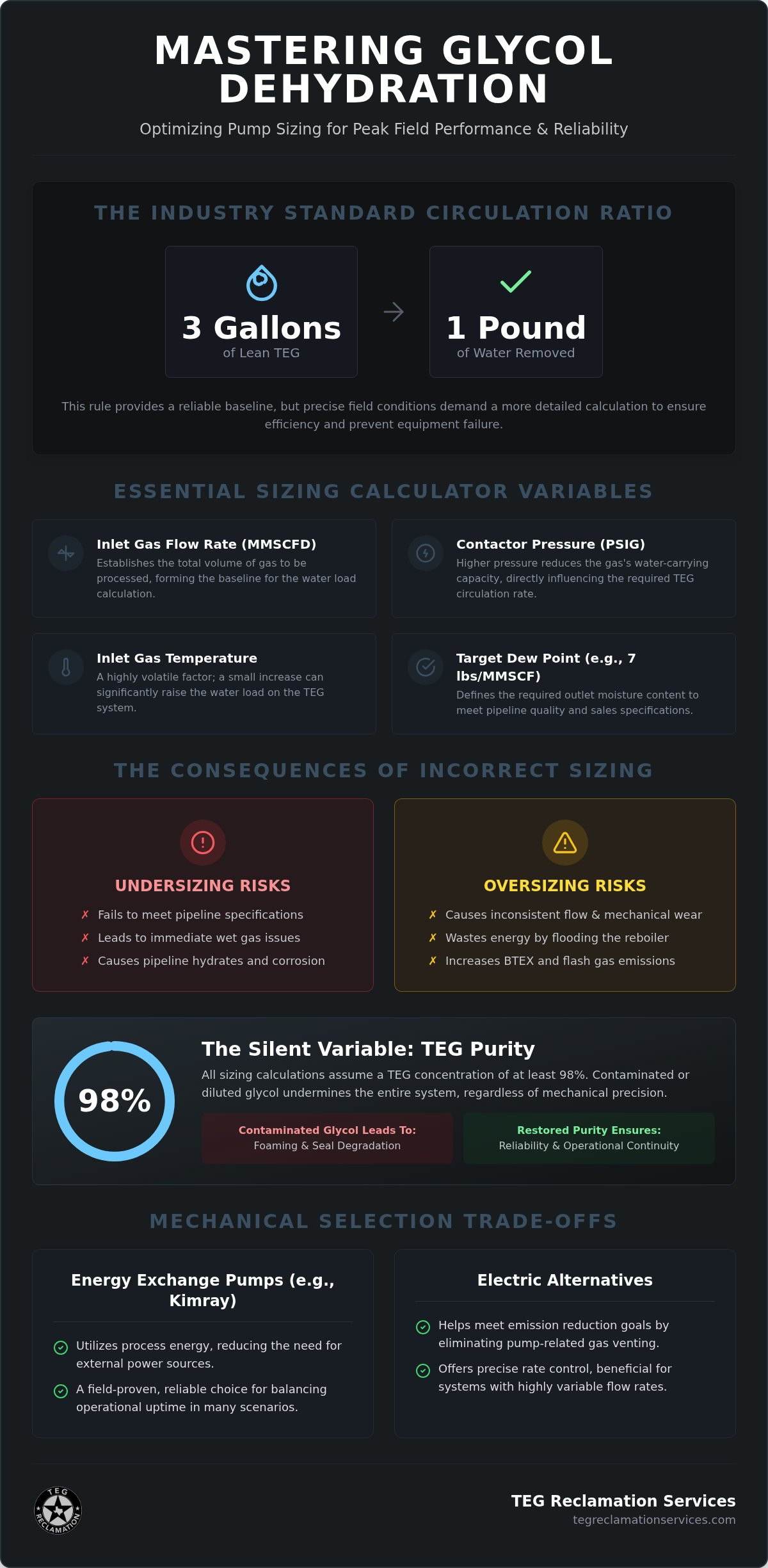
The primary objective of precise sizing is ensuring the glycol dehydration process removes enough water vapor to meet pipeline dew point specifications, typically 7 lbs/MMSCF. At its core, this is a mass transfer problem. You're circulating lean triethylene glycol (TEG) to absorb water from the gas stream. The industry standard recommends a circulation ratio of 3 gallons of TEG for every pound of water removed. While this rule of thumb provides a baseline, actual field performance depends on how well the pump maintains this chemical equilibrium under varying inlet conditions.
Achieving the correct circulation rate requires a balance between mechanical capacity and thermal limits. Over-circulation is just as damaging as under-circulation. If the pump moves too much glycol, it can flood the reboiler, leading to excessive fuel gas consumption and increased emissions. Conversely, under-circulation results in wet gas that fails to meet sales specifications, risking pipeline hydrates and corrosion. Using a glycol pump sizing calculator allows operators to determine the exact stroke rate needed to maintain efficiency without overworking the hardware.
Why Proper Sizing Prevents DEHY Failure
Undersized pumps simply can't move enough TEG to achieve the necessary dew point depression. This leads to immediate gas quality issues. However, the risks of oversizing are often overlooked. When a pump is too large for the application, it often operates at the extreme low end of its stroke range. This causes inconsistent flow and increased mechanical wear on Kimray pump internals. Oversizing also forces the reboiler to process more glycol than necessary. This wastes energy and increases the volume of flash gas and BTEX emissions released through the still column. A properly sized pump keeps the system in a state of "calm competence," where mechanical restoration needs are minimized and operational continuity is preserved.
The 3-Gallon Rule vs. Precision Calculation
The 3-gallon rule is a reliable starting point for standard field operations. It's often sufficient when inlet temperatures and pressures remain within typical design parameters. However, situations involving high-pressure gas or elevated inlet temperatures require more than a simple rule of thumb. As gas pressure increases, its water-carrying capacity decreases; conversely, higher temperatures significantly increase the water load. In these scenarios, a glycol pump sizing calculator becomes essential. You must input specific MMSCFD flow rates and contactor pressures to determine the actual pounds of water per million cubic feet. This precision ensures that the pump's displacement matches the real-world water load, preventing the system from falling out of spec during seasonal temperature swings.
Essential Variables for Your Glycol Pump Sizing Calculator
To use a glycol pump sizing calculator effectively, you must gather precise field data. The accuracy of your output depends entirely on the fidelity of your inputs. These variables define the physical environment where your equipment operates and dictate the required mechanical response from your Kimray pump. Gathering this information is the first step toward achieving operational continuity and meeting strict pipeline specifications.
Inlet gas flow rate, measured in MMSCFD, establishes the baseline volume. Contactor pressure is equally vital because higher pressure naturally reduces the water-carrying capacity of natural gas. For example, gas at 1,000 psig holds significantly less moisture than gas at 500 psig at the same temperature. Temperature is often the most volatile factor in the field. A 10-degree rise in inlet gas temperature can nearly double the water load on your triethylene glycol (TEG) system. Lastly, your target dew point sets the required outlet moisture level, typically 7 lbs/MMSCF for pipeline quality gas.
Chemical purity acts as the silent variable. All sizing mathematics assume a TEG concentration of at least 98%. If your glycol is contaminated or diluted, the pump will struggle to meet specs regardless of the sizing results. If you suspect your fluid quality is compromised, professional Vacuum Distillation Glycol Reclamation can restore the chemical integrity needed for accurate system performance.
Calculating Water Load and Removal Requirements
Determining the total water load is a three-step process. First, identify the water content of the inlet gas in pounds per million standard cubic feet (lb/MMSCF) using industry saturation charts. Second, subtract your allowable outlet water content from this inlet total to find the required moisture reduction. Finally, multiply this difference by your daily gas flow rate. This calculation provides the total pounds of water your system must remove every 24 hours. This data is the foundation of any reliable glycol pump sizing calculator result.
Determining the Required Glycol Circulation Rate
Once you know the daily water load, you can establish the circulation rate. Most operators apply a ratio between 1.5 and 4.0 gallons of TEG per pound of water, though the 3-gallon rule remains the safest baseline for many applications. Optimizing TEG circulation rates is essential for minimizing emissions and reducing mechanical wear on your Kimray pumps.
You must convert this daily volume into Gallons Per Minute (GPM) or Gallons Per Hour (GPH) to set your pump strokes. For Kimray energy exchange models, factor in a volumetric efficiency of roughly 90% to account for internal slippage. This adjustment ensures the pump delivers the actual volume required by the calculator. Precise stroke adjustments prevent the common pitfalls of over-circulation, such as reboiler flooding and excessive flash gas. This methodical approach ensures your hardware operates within its designed performance envelope.
Mechanical Selection: Energy Exchange vs. Electric Pumps
The flow rate result from your glycol pump sizing calculator directly dictates the model number and configuration of the hardware you'll install. Selection isn't merely about meeting a GPM target; it's about matching the mechanical drive system to your facility's infrastructure and long-term maintenance goals. Kimray energy exchange pumps remain the industry standard for high-pressure dehydration where external power is limited. Electric pumps offer an alternative for facilities prioritizing emission reduction and automated flow control. Both require a specific sizing approach to prevent premature mechanical failure.
Calculated GPM influences the size of the pump required to avoid excessive cycle rates. If a pump is sized too small, the resulting high stroke frequency leads to accelerated diaphragm wear and shortened seal life. Conversely, a pump that is significantly oversized for the application may struggle to maintain a consistent prime at very low speeds. Regardless of the drive type, the reliability of your sizing math depends on fluid quality. Contaminated glycol changes the lubricity and density of the stream, which can cause the pump to deviate from its designed performance curve.
When to Specify Kimray Energy Exchange Pumps
Kimray energy exchange pumps are the primary choice for remote locations without reliable electricity. These units utilize the potential energy of the high-pressure rich glycol coming from the contactor to power the movement of lean glycol back into the system. This design allows the pump to scale its output naturally as contactor pressure varies. However, troubleshooting sizing-related failures in these units often reveals a lack of attention to pressure differentials. If the pressure isn't sufficient to overcome the internal friction of an oversized model, the pump may stall. Maintaining the system with Kimray Pump Repair and Service ensures that the internal slide valves and O-rings are optimized for the specific pressures identified in your glycol pump sizing calculator.
The Case for Electric Glycol Circulation
Electric pumps provide steady-state circulation that remains independent of contactor pressure fluctuations. This makes them a preferred choice for systems integrated with automated BTEX emission control or those requiring a constant dew point despite erratic gas flow. Sizing electric models involves selecting the correct motor horsepower and a Variable Frequency Drive (VFD). The VFD allows operators to adjust the circulation rate based on real-time gas loads without performing mechanical hardware swaps. While electric systems eliminate the methane venting associated with gas-powered pumps, they are highly sensitive to solids and contaminants. A clean fluid stream is non-negotiable for protecting the mechanical seals and internal impellers of an electric circulation system.
Operational Pitfalls: Why the Calculator Might Fail in the Field
Even a precise result from a glycol pump sizing calculator provides only a theoretical baseline. Field conditions frequently introduce variables that the math cannot account for, leading to a disconnect between calculated circulation and actual dew point depression. When the system fails to meet specifications despite correct sizing, the issue usually stems from fluid degradation or mechanical interference. "Black glycol," characterized by high solids content and thermal degradation products, changes the physical properties of the TEG, making it more difficult for the pump to maintain a consistent flow rate.
Foaming and gas entrainment are common field challenges that disrupt pump prime. If the glycol is contaminated with hydrocarbons or salts, surface tension changes and creates foam in the contactor. This entrained gas enters the pump suction, causing the unit to air-bind or lose prime entirely. Additionally, chloride contamination acts as a silent killer for pump internals. Salt buildup creates abrasive friction on diaphragms and slide valves, leading to internal bypass that reduces the pump's volumetric efficiency below the calculator's assumed 90% threshold.
Thermal degradation also plays a critical role. When TEG is overheated in the reboiler, typically exceeding 350°F, it breaks down into organic acids. These acids not only corrode pump seals but also reduce the glycol's affinity for water. This means the pump must move more fluid to achieve the same drying effect, effectively rendering your initial sizing calculations obsolete.
Impact of Glycol Quality on Pump Performance
Contaminated TEG requires significantly higher circulation rates to achieve the same dew point as clean fluid. As particulates and solids accumulate, they increase the mechanical friction within the pump's moving parts, leading to heat buildup and premature seal failure. This friction forces the motor or gas-assist mechanism to work harder, often resulting in erratic stroke rates that don't match the calculator's output. Maintaining 98% purity ensures the calculator's math remains valid in practice. Without this level of chemical integrity, the mechanical restoration of the pump is merely a temporary fix for a deeper process issue.
Troubleshooting Pump and Circulation Failures
Distinguishing between "vapor lock" and mechanical failure is essential for maintaining operational continuity. Vapor lock often occurs when rich glycol flashes in the pump or suction line, whereas mechanical failure involves the degradation of the O-rings, check valves, or diaphragms. Operators can consult a glycol circulation pump repair guide to diagnose whether the issue is a sizing mismatch or a physical hardware defect. If the pump is mechanically sound but the gas remains wet, it's often a sign the system needs comprehensive chemical flushing to remove accumulated sludges. Before investing in a larger pump, consider whether restoring your current fluid through Vacuum Distillation Glycol Reclamation would solve the performance gap more efficiently.
Optimizing DEHY Performance with Technical Field Services
Technical field services bridge the gap between theoretical calculations and operational reality. While a glycol pump sizing calculator establishes the necessary mechanical parameters, maintaining those design specifications requires proactive chemical and mechanical management. When field results don't align with engineering models, it's typically because the internal environment of the DEHY system has shifted. Commissioning and optimization services ensure that your current pump sizing and circulation rates match the actual gas profile, which may have changed significantly since the facility was first commissioned.
Restoring system design specs is most effectively achieved through high-purity glycol reclamation. By utilizing a proprietary sidestream vacuum distillation process, operators can remove the sludges and contaminants that cause mechanical friction and chemical inefficiency. This approach provides a long-term solution for pump health by ensuring the fluid being circulated is free of the abrasives that degrade seals and diaphragms. It allows the system to return to the performance levels predicted by the initial sizing math without the need for costly equipment overhauls or unoptimized hardware swaps.
In addition to process optimization, the physical construction and expansion of these industrial sites require expert ground preparation; for professional site work, companies like Gelişim Hafriyat provide the specialized excavation and demolition services needed for robust energy infrastructure.
Kimray Pump Repair and Maintenance
Maintaining operational continuity requires immediate access to specialized Kimray pump repair and technical support. On-site repair services minimize downtime by addressing mechanical failures directly at the wellhead or processing plant. Beyond simple part replacement, field technicians can upgrade pump internals to better handle modern operational stresses, such as increased contactor pressures or fluctuating flow rates. This mechanical restoration ensures that the hardware remains capable of delivering the GPM targets identified in your glycol pump sizing calculator, even as well conditions evolve over time.
Glycol Reclamation and Purity Restoration
A professional glycol reconditioning service eliminates the chemical variables that break standard sizing models. Restoring TEG to 98% purity or higher is the only way to ensure the fluid maintains the water-carrying capacity required to meet strict pipeline specifications. This process doesn't just protect your pump assets from corrosive organic acids and abrasive salts; it also significantly reduces the long-term costs associated with full chemical replacement and waste disposal. Clean glycol ensures that every pump stroke is as effective as the engineering logic intended, providing a steady-state solution for complex dehydration challenges.
Securing Operational Continuity Through Precise Dehydration
Effective dehydration depends on the synergy between mechanical precision and chemical purity. While a glycol pump sizing calculator provides the necessary engineering baseline, field performance is ultimately dictated by the quality of the triethylene glycol being circulated. Contaminants and thermal degradation can quickly invalidate theoretical models, leading to wet gas and premature pump failure. By integrating accurate sizing with consistent fluid maintenance, operators can protect their infrastructure and ensure compliance with strict pipeline specifications.
Since 2008, we've helped the US oil and gas industry overcome complex mechanical and chemical challenges. Our proprietary vacuum distillation process restores TEG to 98% purity, while our expert technicians provide specialized on-site Kimray pump repair and troubleshooting to resolve performance gaps. Optimize your DEHY system with TEG Reclamation Services to reduce operational costs and extend the service life of your equipment. Taking these proactive steps ensures your facility remains efficient and reliable in any environment.
Frequently Asked Questions
How do I calculate the required glycol circulation rate?
Calculate your circulation rate by multiplying the daily gas flow rate by the pounds of water removed, then applying your chosen circulation ratio. For example, if your system removes 50 pounds of water daily at a 3:1 ratio, you require 150 gallons of TEG per day. Use a glycol pump sizing calculator to convert this daily total into precise strokes per minute or GPM based on your specific pump's displacement.
What is the standard ratio of glycol to water removed in a DEHY unit?
The industry standard is 3 gallons of triethylene glycol (TEG) for every pound of water removed from the gas stream. While some specialized systems operate between 1.5 and 4 gallons per pound, the 3-gallon rule provides a reliable safety margin for most contactor pressures. Sticking to this ratio helps maintain the chemical equilibrium required to meet a 7 lb/MMSCF pipeline specification consistently.
Why is my Kimray pump failing despite being sized correctly?
Premature failure in correctly sized pumps is typically caused by fluid contamination rather than mechanical design flaws. Solids, salts, and organic acids act as abrasives that degrade O-rings, diaphragms, and slide valves. If your hardware is sound but performance remains erratic, the issue likely stems from "black glycol" or chemical imbalances that increase internal friction and mechanical wear beyond designed limits.
Can I use an electric pump instead of a Kimray energy exchange pump?
You can switch to an electric pump if your facility has a reliable power source and requires precise, automated flow control. Electric models eliminate the methane emissions associated with gas-assist pumps and provide steady circulation regardless of contactor pressure fluctuations. However, these units are highly sensitive to particulates, so consistent fluid reclamation is essential for protecting mechanical seals and internal impellers.
How does glycol purity affect the sizing of my circulation pump?
Purity levels below 98% force the pump to circulate more fluid to achieve the same dehydration results. Diluted or contaminated glycol has a lower affinity for water, which effectively reduces the volumetric efficiency of your dehydration system. A glycol pump sizing calculator assumes high-purity fluid; if your TEG is degraded, the calculated circulation rate will fail to meet your outlet gas moisture targets.
What are the symptoms of an undersized glycol pump?
The most common symptom is an inability to reach the target dew point, resulting in wet gas at the outlet. You'll often see the pump running at its maximum stroke rate without a corresponding drop in moisture content. This indicates the water load exceeds the pump's displacement capacity, which frequently happens when inlet temperatures rise or gas flow increases beyond the original design parameters.
How often should I re-evaluate my pump sizing based on gas flow changes?
Re-evaluate your pump sizing whenever there's a significant change in gas volume, inlet temperature, or contactor pressure. Seasonal temperature swings often increase the water load, requiring a higher circulation rate than what was calculated during cooler months. Regular audits ensure your equipment isn't being overworked or operating at inefficiently low speeds that risk operational continuity.
Does foaming affect the accuracy of glycol pump sizing?
Foaming significantly impacts sizing accuracy by introducing entrained gas into the pump suction. This leads to vapor lock and a loss of prime, preventing the pump from delivering the calculated GPM required for effective dehydration. If foaming occurs, the mechanical restoration of the pump won't solve the problem; you must address the chemical contamination causing the surface tension changes in the glycol.


Comments