
Dehydration Plant Chemical Flushing: A Technical Guide to System Restoration (2026)
Mechanical cleaning alone is often a temporary fix for a system suffering from deep-seated thermal degradation and salt accumulation. While hydro-blasting might clear a visible blockage, it fails to address the microscopic film and acid buildup that lead to equipment corrosion and wet gas. Professional dehydration plant chemical flushing is the only reliable method for stripping away the stubborn contaminants that compromise your triethylene glycol (TEG) and overall plant performance.
It's frustrating to watch your glycol foaming and filter plugging persist even after a standard turnaround. You need a solution that restores your dehydration unit to its original design specifications while extending the life of your expensive equipment. This technical guide outlines how advanced chemical flushing processes neutralize acids and remove chlorides that mechanical methods leave behind. We will explore the critical role of system restoration in meeting the 2026 EPA NESHAP standards for hazardous air pollutants; we will also explain how a clean system serves as the essential first step toward successful glycol reclamation and optimized operational uptime.
Table of Contents
Understanding Dehydration Plant Chemical Flushing and Its Role in System Integrity
The Impact of Contaminants: Why Mechanical Cleaning Is Not Enough
Strategic Chemical Flushing vs. Glycol Reclamation: A Dual Approach
Identifying the Signs: When Your Dehydration Unit Requires a Professional Flush
Optimizing DEHY Performance with Professional Technical Field Services
Understanding Dehydration Plant Chemical Flushing and Its Role in System Integrity
Professional dehydration plant chemical flushing is a specialized restoration procedure. It utilizes engineered solvents to dissolve and remove accumulated scale, sludge, and hydrocarbons. Unlike routine maintenance, this process targets the internal surfaces of the contactor, reboiler, and heat exchangers. It ensures the system meets its original dew point depression specifications. Without this intervention, contaminants create a barrier that prevents efficient moisture absorption from the gas stream.
Many operators mistake a simple water rinse for a comprehensive flush. While water can displace loose sediment, it cannot neutralize acidic residues or dissolve polymerized hydrocarbons. In high-stakes oil and gas environments, professional flushing is a non-negotiable prerequisite for both commissioning new equipment and optimizing existing units. It provides a clean slate for the entire process, ensuring that operational continuity isn't compromised by legacy contamination.
The Distinction Between Mechanical Cleaning and Chemical Flushing
Mechanical cleaning methods, such as hydro-blasting, focus on removing physical debris. They're effective for large-scale obstructions but fail at the molecular level. Chemical flushing, by contrast, targets the "varnish" that bonds to vessel walls. This varnish often consists of microscopic chloride salts and acid residues that mechanical tools simply can't reach. Removing these residues is critical to preventing ongoing equipment corrosion.
Standard filtration systems are designed to capture suspended solids. However, they are useless against dissolved chemical contaminants. These substances circulate through the Glycol dehydration process, causing continuous degradation of the triethylene glycol (TEG). Only a chemically active solvent can break these bonds and ensure total system purification. This level of cleanliness is what separates a standard turnaround from a professional system restoration.
Core Objectives of a Professional System Flush
The primary goal of a flush is the elimination of "black glycol" precursors. These are often iron sulfides and other corrosion byproducts that darken the TEG and cause chronic foaming. By stripping these materials from the internal piping, dehydration plant chemical flushing prevents immediate re-contamination of fresh or reclaimed glycol. It protects the integrity of the fluid from day one.
Another critical objective is the restoration of heat transfer efficiency. When sludge builds up on reboiler fire tubes or heat exchanger plates, the system must work harder to maintain temperature. This leads to higher fuel consumption and accelerated equipment wear. A thorough flush restores these thermal properties to their design specifications. This preparation is vital before introducing reclaimed glycol, as it ensures the high-purity fluid remains stable and effective for the longest possible duration.
The Impact of Contaminants: Why Mechanical Cleaning Is Not Enough
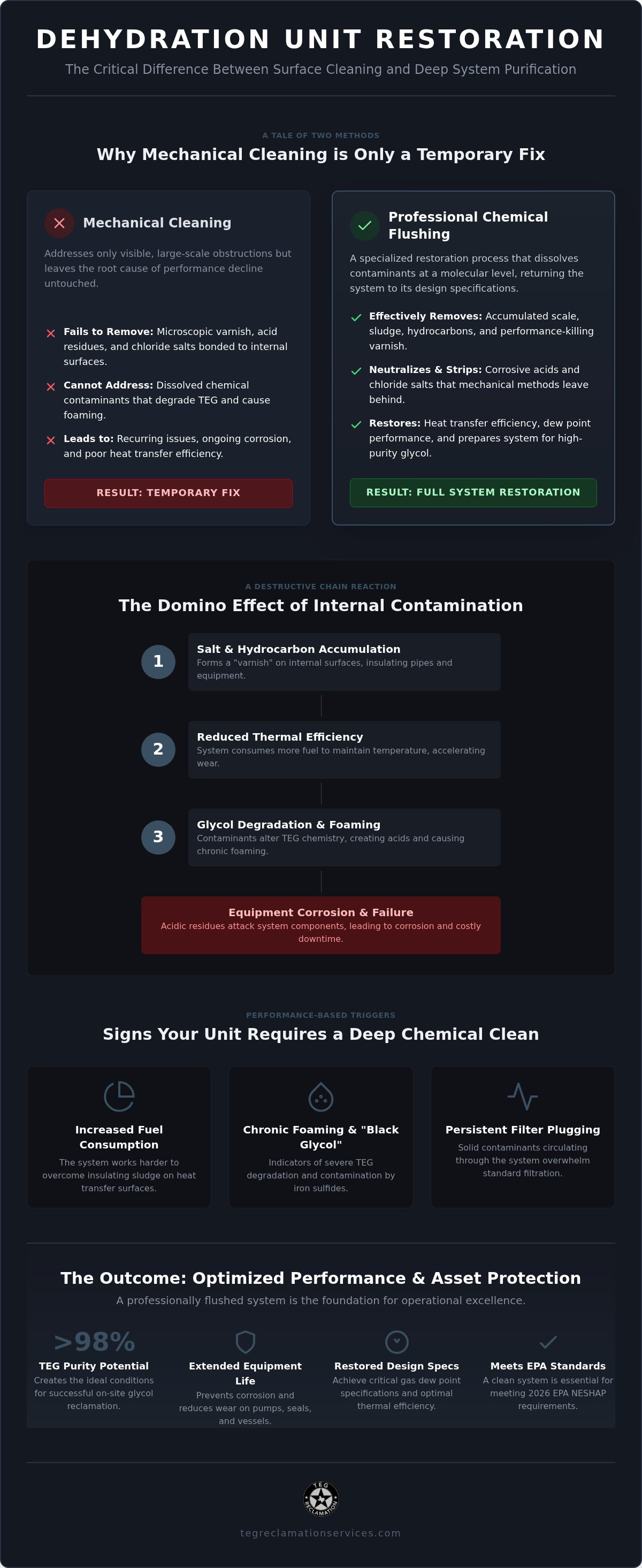
Mechanical cleaning methods often address the symptoms of a failing dehydration unit without resolving the underlying chemical causes. While hydro-blasting removes loose debris, it cannot penetrate the "varnish" that forms when hydrocarbons and salts bond to internal vessel walls. This polymer-like coating acts as an insulator on reboiler fire tubes and heat exchanger plates, forcing the system to consume more fuel to achieve the same temperature. Over time, dehydration plant chemical flushing becomes the only viable path to stripping this buildup and restoring thermal efficiency.
Contamination triggers a destructive domino effect within the system. For instance, salt accumulation doesn't just cause corrosion; it also alters the surface tension of the triethylene glycol, leading to chronic foaming and filter plugging. This unstable fluid chemistry accelerates the thermal degradation of the glycol, creating organic acids that lower the pH. According to the GPSA Engineering Data Book, maintaining precise fluid chemistry is essential for preventing hydrate formation and protecting the structural integrity of the contactor tower. When these chemical balances fail, critical components like Kimray pumps experience premature seal failure, and BTEX emission control systems become choked with scale.
Managing Chlorides and Salt Accumulation
Chlorides typically enter the dehydration loop through produced water carryover from upstream separators. Once inside, they concentrate in the reboiler and settle in low-flow areas, causing localized pitting corrosion. Midstream operators generally recognize chloride levels exceeding 1,000 ppm as a critical threshold where the risk of stress corrosion cracking becomes unacceptable. Effective system restoration requires removing chlorides from glycol and the internal surfaces of the vessels to prevent catastrophic metal loss.
Neutralizing Corrosive Acids in the Glycol Loop
Thermal stress causes glycol molecules to "crack," resulting in the formation of corrosive organic acids such as formic and acetic acid. These acids aggressively attack carbon steel components, leading to the "black glycol" phenomenon discussed in previous sections. A professional dehydration plant chemical flushing protocol must prioritize glycol system acid neutralization to halt this cycle of decay. If the pH is not corrected during the flushing phase, any fresh or reclaimed glycol introduced to the unit will immediately begin to degrade, wasting significant capital and labor. Operators who prioritize these technical field services ensure that their equipment remains compliant with safety standards while maximizing the service life of their chemical assets.
Strategic Chemical Flushing vs. Glycol Reclamation: A Dual Approach
Traditional maintenance often relies on the "dump and fill" method, where contaminated glycol is disposed of and replaced with new fluid. This approach is inherently flawed; it ignores the residual contaminants adhering to the internal surfaces of the dehydration unit. Without a comprehensive dehydration plant chemical flushing, any new triethylene glycol (TEG) introduced to the system will immediately absorb legacy acids and salts. An integrated strategy instead combines system restoration with on-site purification to ensure the hardware and the chemistry are equally clean.
Adhering to standards for Pipeline integrity management in high consequence areas requires a proactive stance on corrosion and fluid quality. By utilizing a proprietary sidestream vacuum distillation process, operators can restore their existing TEG to over 98% purity. This integrated approach allows for system purification while maintaining full operational capacity. There's no need for costly production shutdowns, as these technical field services are performed while the gas continues to flow.
Synergy Between System Cleaning and Fluid Purification
Putting high-purity glycol into a dirty system is a wasted investment. The technical workflow must prioritize cleaning the vessel walls and reboiler tubes before or during the reclamation process. This ensures that the purified fluid isn't instantly degraded by the varnish and sludge described in earlier sections. Effective glycol contamination removal requires this dual focus on both the mechanical infrastructure and the chemical medium. When the hardware is stripped of chlorides and acids, the reclaimed glycol remains stable and performs at design specifications for a significantly longer interval.
Reducing Operational Costs Through Integrated Maintenance
The economic logic of this dual approach is undeniable. Replacing several thousand gallons of TEG represents a massive capital expenditure. Reclaiming that same fluid to 98% purity on-site typically costs a fraction of the replacement price. Beyond fluid savings, regular dehydration plant chemical flushing prevents the debris-related wear that leads to an emergency Expert Kimray pump repair 2026. By maintaining a clean loop, you protect your pumps from abrasive particles and corrosive acids. This level of preventive maintenance ensures maximum uptime, allowing gas processing facilities to meet their delivery obligations without the threat of unexpected equipment failure.
Identifying the Signs: When Your Dehydration Unit Requires a Professional Flush
Recognizing the early indicators of system distress is vital for preventing catastrophic failure. While "black glycol" is the most recognizable sign of iron sulfide contamination, it often appears after internal damage has already begun. Chronic foaming is another critical warning. If chemical anti-foams are no longer effective, it's a clear signal that the underlying fluid chemistry is compromised by dissolved solids and hydrocarbons. In these instances, a professional dehydration plant chemical flushing is necessary to strip the internal surfaces and restore stability.
Performance-based triggers provide more subtle but equally important data. A steady rise in gas dew points, even when circulation rates are within design parameters, indicates tray fouling or poor contactor efficiency. Similarly, an increase in fuel consumption at the reboiler suggests that a layer of sludge or scale is insulating the fire tubes. These thermal barriers force the burner to work harder, leading to premature metal fatigue and potential tube failure. Monitoring these trends allows operators to intervene before the unit loses its ability to meet pipeline specifications.
Pressure drops across particulate and carbon filters serve as an early warning system. If your team is replacing filter elements with increasing frequency, the system is likely shedding accumulated sludge. This debris doesn't just clog filters; it migrates through the entire loop, causing abrasive wear on internal components. Regular laboratory analysis of glycol samples is the only way to track these trends accurately. We recommend quarterly testing to monitor pH levels, chloride concentration, and total suspended solids to determine the optimal timing for a restoration project.
Operational Indicators of Chemical Fouling
Implementing effective glycol foaming solutions often requires more than just chemical additives. When internal fouling occurs, it disrupts reboiler temperature control and burner management systems. This thermal instability leads to poor glycol regeneration, which in turn causes pump seal failures due to the presence of degraded fluid. A thorough dehydration plant chemical flushing clears these pathways, allowing the equipment to operate within its intended mechanical tolerances and protecting the integrity of the pump loop.
The Importance of Periodic Maintenance Audits
Periodic maintenance audits provide the data needed to schedule proactive cleaning. A technical field inspection can reveal hidden issues in contactors and stills that lab results might miss, such as localized corrosion or tray displacement. Ideally, a baseline should be established during DEHY system commissioning. This initial data point allows operators to measure the rate of contamination and schedule a restoration before performance drops below critical levels. If your unit is showing signs of distress, you can request technical field services to evaluate your system's specific restoration needs.
Optimizing DEHY Performance with Professional Technical Field Services
Maintaining a midstream facility requires a partner who understands the high stakes of operational uptime. Technical field services go beyond simple repairs; they provide the specialized engineering needed to maintain system integrity under rigorous conditions. Professional dehydration plant chemical flushing serves as the foundation for this optimization, ensuring that every internal component is prepared for peak performance. This methodical approach is the only way to guarantee that your equipment meets its original design specifications.
Our team provides comprehensive support that addresses every aspect of the dehydration process. This includes everything from BTEX emission control upgrades to the fine-tuning of burner management systems. By integrating these services, we ensure that your facility remains compliant with the evolving 2026 EPA standards while maximizing the service life of your triethylene glycol. We position ourselves as an elite partner for facilities where failure isn't an option and precision is a requirement.
The TEG Reclamation Services Advantage
With over 45 years of leadership experience, our team brings a level of industrial authority that's rare in the process equipment sector. We operate with a "no-nonsense" approach, focusing on technical proof and mechanical results rather than marketing claims. This veteran experience allows us to troubleshoot complex dehydration challenges that others might overlook, such as subtle pressure differentials or localized corrosion patterns in the contactor tower.
Discretion is a core component of how we operate. We understand the importance of protecting client operational data and internal processes. Our proprietary technical solutions are designed to restore your system without compromising your facility's competitive advantages. We don't just provide a service; we act as guardians of your equipment health, ensuring that your "secret sauce" remains secure while your hardware returns to peak efficiency.
Taking the Next Step in System Optimization
Many facility managers fall into the trap of reactive maintenance, only addressing issues once they impact gas delivery. Proactive restoration is a more cost-effective strategy. By scheduling regular dehydration plant chemical flushing and system audits, you can identify precursors to failure before they lead to an emergency shutdown. This methodical approach ensures that your TEG remains at over 98% purity and your hardware remains in top condition for the long term.
Moving toward a proactive maintenance model begins with a comprehensive system audit. Our technical field services provide a clear roadmap for restoration, identifying the specific contaminants and mechanical bottlenecks holding back your production. We invite you to Contact TEG Reclamation Services for specialized DEHY support. to begin the process of restoring your dehydration unit to total operational efficiency.
Securing Long-Term Operational Uptime for Dehydration Units
Effective system restoration requires moving beyond surface-level cleaning to address the molecular-level contaminants that compromise your process. Relying solely on mechanical methods leaves behind the acidic residues and chloride salts that lead to persistent equipment failure and wet gas. Professional dehydration plant chemical flushing is the essential first step. It strips away the internal varnish that restricts heat transfer and accelerates fluid degradation.
By integrating this thorough cleaning with our proprietary on-site distillation, you can restore your triethylene glycol to over 98% purity without a production shutdown. Our veteran-led technical field teams bring over 45 years of leadership experience to every project, ensuring that your dehydration loop returns to its original design specifications. This dual approach not only protects your capital investment in TEG but also extends the service life of critical hardware like Kimray pumps.
Don't let legacy contamination dictate your plant's efficiency. Restore your DEHY efficiency with TEG Reclamation Services and secure the reliability your midstream facility requires. We look forward to helping you optimize your dehydration performance.
Frequently Asked Questions
How often should a dehydration plant undergo chemical flushing?
Frequency depends on gas quality and specific contamination rates. While some plants operate for years, units processing gas with high salt carryover or thermal stress may require a flush every 2-3 years. Quarterly lab analysis of glycol samples is the best way to determine the specific interval for your facility. Identifying rising chloride levels or a drop in pH early allows you to schedule restoration before catastrophic failure occurs.
Will chemical flushing require a complete production shutdown?
No, professional technical field services allow for system restoration while the plant remains online. Our no-shutdown service model ensures that dehydration plant chemical flushing and fluid purification occur while gas continues to flow. This approach minimizes lost revenue and maintains operational continuity. By utilizing sidestream processing, we address internal fouling and chemistry degradation without interrupting your delivery obligations or pipeline commitments.
What is the difference between water flushing and chemical flushing?
Water flushing only removes loose, water-soluble debris like sand or loose sediment. It can't dissolve the polymerized hydrocarbon varnish or neutralize the organic acids that bond to vessel walls. Chemical flushing utilizes engineered solvents specifically designed to break these molecular bonds. This process strips away iron sulfides and chloride salts that water alone can't reach, ensuring a truly clean internal surface for the glycol loop.
Can chemical flushing solve chronic glycol foaming issues?
Yes, because foaming is often caused by dissolved solids and hydrocarbons that accumulate on the internal surfaces of the contactor. These contaminants alter the surface tension of the triethylene glycol. A thorough flush removes these foaming precursors from the reboiler and piping. Once the system is stripped of these impurities, the reclaimed glycol remains stable and the effectiveness of anti-foam additives is significantly improved.
How does flushing affect the life expectancy of my Kimray pumps?
Periodic flushing significantly extends pump life by removing abrasive particles and corrosive acids from the circulating fluid. Contaminants like iron sulfide and salt act as sandpaper on pump seals and internal diaphragms. By clearing these substances from the loop, you prevent premature mechanical wear and the need for emergency repairs. Maintaining a clean system ensures that the pumps operate within their intended mechanical tolerances for a longer duration.
What happens to the waste chemicals after the flushing process is complete?
All spent solvents and captured contaminants are handled in strict accordance with environmental and safety regulations. While TEG Reclamation Services doesn't provide off-site waste disposal services, our technical teams work with your facility's existing waste management protocols to ensure proper containment. We focus on maximizing the recovery of usable glycol during the process, which naturally reduces the total volume of waste generated during the system restoration.
Is chemical flushing necessary if I am already using glycol reclamation services?
Yes, because reclamation only purifies the fluid, not the hardware. If you put high-purity glycol into a system with internal acid and salt buildup, the fluid will immediately re-contaminate. Dehydration plant chemical flushing prepares the vessels and piping to receive the purified glycol. This integrated approach ensures that the high-purity fluid remains stable and effective, providing the longest possible interval between maintenance cycles.
Can chemical flushing remove chlorides that have already settled in the system?
Yes, specialized chemical solvents are designed to penetrate and dissolve salt accumulations that have bonded to metal surfaces. These chlorides often hide in low-flow areas or beneath a layer of hydrocarbon sludge, where they cause localized pitting corrosion. A professional flush reaches these hidden deposits, neutralizing the corrosive environment and stopping the cycle of metal loss. This is a critical step for maintaining long-term vessel integrity.


Comments