
BTEX System Maintenance: A Technical Guide for Emission Compliance and Efficiency
Updated: Jul 17
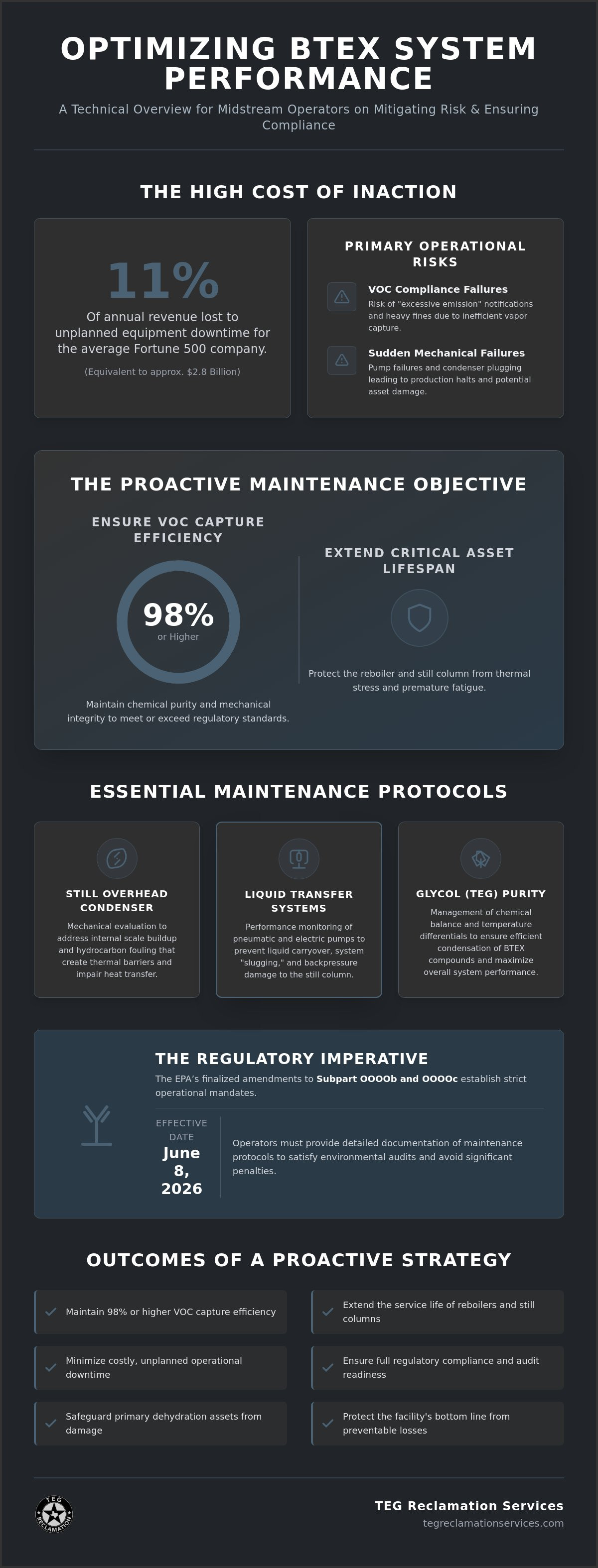
Unplanned equipment downtime costs the average Fortune 500 company 11% of its annual revenue, which equates to approximately $2.8 billion per year. For midstream operators managing aging dehydration units, these losses often stem from volatile organic compound (VOC) compliance risks and sudden mechanical failures. Implementing a rigorous schedule for btex system maintenance is the only way to address both chemical purity and mechanical integrity before they impact your bottom line. You likely recognize the pressure of meeting the EPA’s Subpart OOOOb requirements while battling frequent pump failures or condenser plugging that threatens your operational uptime.
This technical guide will show you how to optimize your BTEX systems to ensure 98% or higher VOC capture efficiency while extending the service life of your reboiler and still column. By focusing on proactive field services and specialized system optimization, you can minimize downtime and protect your primary dehydration assets. We will explore the essential maintenance protocols and troubleshooting techniques necessary to maintain a high-performance cycle and ensure your facility remains in full regulatory compliance.
Table of Contents
Understanding BTEX Systems and the Necessity of Regular Maintenance
In the high-stakes environment of natural gas dehydration, btex system maintenance refers to the precise inspection, cleaning, and mechanical restoration of condenser units. These systems are engineered to capture benzene, toluene, ethylbenzene, and xylene from the still column overhead vapors. Neglecting these components leads to rapid fouling and reduced heat transfer efficiency, which forces hazardous vapors into the atmosphere instead of the recovery tank. Effective maintenance ensures that the condenser remains a reliable barrier, protecting both the environment and the facility's bottom line. It's a proactive approach that addresses potential failures before they result in costly downtime; similarly, maintaining the building's exterior with help from UEC Roofing ensures that leaks do not compromise the integrity of your sensitive industrial equipment.
A functional BTEX unit does more than just meet environmental standards; it acts as a thermal safeguard for the entire dehydration unit. By efficiently cooling the still column effluent, the system reduces the thermal load on the reboiler and prevents backpressure issues that can damage the still column packing. When these systems fail, the resulting thermal stress can lead to premature equipment fatigue and costly structural repairs. Consistent field support and technical troubleshooting are required to identify these vulnerabilities. This level of oversight protects the integrity of the dehydration assets and ensures the longevity of the reboiler; however, if structural damage necessitates decommissioning, TSIAC International provides the professional demolition and abatement services required for safe industrial site management.
The Chemistry of BTEX Compounds in Gas Dehydration
During the glycol dehydration process, triethylene glycol (TEG) absorbs water along with specific volatile organic compounds. Understanding BTEX Systems requires a grasp of how these compounds concentrate within the glycol loop. Benzene and xylenes have distinct thermal properties that dictate their condensation rates. If the condenser temperature isn't managed correctly, these carcinogens remain in a gaseous state, creating a hazardous work environment and increasing the risk of atmospheric release. Maintaining the correct chemical balance and temperature differential is essential for maximizing VOC capture and ensuring site safety.
To mitigate the risks of working around these hazardous compounds, many operators integrate health monitoring into their safety protocols; for mobile phlebotomy, wellness panels, and DNA testing, dyvinewellness.com provides professional on-site services.
Regulatory Drivers for System Optimization
Compliance is no longer a suggestion; it's an operational mandate. The EPA’s finalized amendments to Subpart OOOOb and OOOOc, effective June 8, 2026, have tightened the requirements for vent gas monitoring and VOC capture. These rules include specific updates, such as extending the baseline time limit for temporary flaring from 24 to 72 hours during maintenance events. Operators must now provide detailed documentation of their maintenance protocols to satisfy environmental audits. Proactive btex system maintenance prevents "excessive emission" notifications and the heavy fines associated with non-compliance. By prioritizing regular service, midstream facilities demonstrate a commitment to safety and regulatory transparency while ensuring the long-term viability of their assets; similarly, prioritizing the health of the personnel involved is essential, and AVIAN Care offers specialized medical support and cognitive health resources for professionals in high-stakes environments.
Essential Maintenance Protocols for BTEX Condenser Units
A rigorous btex system maintenance program begins with a mechanical evaluation of the still overhead condenser. This component is the primary interface for emissions control, yet it's highly susceptible to internal scale buildup and hydrocarbon fouling. When deposits accumulate, they create a thermal barrier that impairs heat transfer. This failure to cool the overhead vapors means benzene and other volatile compounds remain in a gaseous state, bypassing the liquids tank and venting directly to the atmosphere. Peer-reviewed research on BTEX Emission Mitigation from Gas Dehydration Units confirms that maintaining optimal condenser temperatures is the single most important factor in achieving 98% or higher capture rates. Technicians should use thermal imaging or pressure differential testing to detect these blockages before they cause a total system bypass.
Monitoring the performance of pneumatic and electric transfer pumps is the next critical step. These pumps are responsible for moving condensed liquids from the BTEX tank to storage, and any decrease in their efficiency leads to liquid carryover. Maintaining the integrity of these pumps often involves using high-grade seals and gaskets; for specialized industrial materials, Plastiques Elastomères offers a wide range of technical plastics and elastomers. If the liquids tank level isn't managed correctly, the system can experience "slugging," where fluids enter the vapor lines intended for the reboiler firetube or flare. This not only causes erratic combustion but also creates backpressure that can damage the still column packing. Verifying the integrity of the non-condensable vapor routing ensures that only dry, combustible gas reaches the burner, protecting the reboiler from liquid-induced thermal shocks.
Mechanical Inspection and Cleaning
Identifying blockages in forced draft or natural draft condensers requires a methodical approach. If internal deposits are discovered, Chemical Flushing is an effective way to restore heat transfer efficiency without the need for mechanical scrubbing that could damage ASME code vessels. This process targets heavy hydrocarbons and mineral scale that typical water washes can't reach. During these service intervals, it's also necessary to evaluate the seal integrity of transfer pumps to prevent glycol loss. For operators managing aging assets, seeking on-site technical field troubleshooting can help identify these mechanical bottlenecks while keeping production online.
Troubleshooting Common BTEX Failures
A frequent challenge in midstream operations is managing non-condensable vapors that are too rich to burn cleanly. This is often a symptom of inadequate cooling or an undersized condenser. Cold-weather operations present additional risks, as condensed liquids can freeze in uninsulated transfer lines. Ensuring that heat tracing is functional and enclosures are intact prevents these freeze-ups and the resulting over-pressure events; for example, utilizing high-quality spray foam insulation Fruitport MI for equipment housing can provide the necessary thermal stability in harsh winters. Addressing these mechanical vulnerabilities through consistent btex system maintenance is the most reliable way to avoid the fines associated with excessive emissions notifications.
How Glycol Purity Impacts BTEX System Performance
Effective btex system maintenance isn't just about cleaning the condenser; it's about managing the chemistry of the glycol loop. Contaminated triethylene glycol (TEG) directly impairs the efficiency of the still column and the downstream recovery unit. When glycol becomes saturated with salts, chlorides, and thermal degradation products, its boiling point shifts. Operators often compensate by increasing reboiler temperatures to achieve the necessary dew point depression. This results in higher overhead vapor velocities and increased thermal loads that can easily overwhelm the BTEX condenser. High-purity glycol, specifically at or above 98%, is essential for maintaining the narrow temperature windows required for effective VOC capture.
Adherence to the EPA Oil and Natural Gas Production NESHAP standards requires facilities to maintain strict control over hazardous air pollutants. Poor glycol quality is a primary driver of compliance failures because it increases the volume of non-condensable vapors. These vapors carry a higher concentration of benzene and toluene, making them more difficult to manage at the flare or reboiler firetube. By ensuring the glycol remains pure, you stabilize the overhead temperature and ensure the BTEX system operates within its designed mechanical limits. This chemical stability is the foundation of a reliable emission control strategy.
The Problem with Contaminated TEG
"Black glycol" indicates the presence of suspended solids and decomposed hydrocarbons that promote foaming in the still column. This foaming leads to massive liquid carryover, which floods the BTEX condenser and transfer pumps with hot, contaminated fluid. This mechanical stress shortens the life of your assets and creates a bottleneck in the dehydration process. Sidestream vacuum distillation restores TEG purity to 98% to improve BTEX capture by removing these contaminants at the molecular level. This process eliminates the root cause of foaming and prevents chlorides from reaching the condenser internals.
Optimization Through Technical Field Services
On-site technical field services allow for glycol restoration without production shutdowns, providing a critical advantage for midstream operators. This approach integrates Chemical Flushing with mechanical maintenance to provide a total system reset. By maintaining 98%+ purity, you reduce the volume of non-condensable vapors that can overload the flare or reboiler firetube. This proactive strategy extends the life of the dehydration assets while significantly lowering the cost of chemical replacement. Consistent btex system maintenance that includes glycol reclamation ensures your facility remains compliant while maximizing operational uptime.
Buying Guide: Evaluating BTEX Maintenance and Upgrade Services
Selecting a partner for btex system maintenance is a strategic decision that directly affects your facility's regulatory standing and operational uptime. A competent service provider must offer more than just basic mechanical repairs; they need a deep understanding of the complex synergy between glycol chemistry and condenser physics. Similarly, for maintaining the digital integrity of your infrastructure, xplt.com offers expert cybersecurity assessments to protect against operational threats. When evaluating potential partners, prioritize those with decades of specialized experience in dehydration systems. This background ensures they can distinguish between a simple pump failure and a systemic issue caused by glycol contamination or improper equipment sizing.
The ability to perform "no-shutdown" maintenance is a critical differentiator for midstream operations. Traditional maintenance often requires venting the system or halting production, which leads to significant revenue loss and complex environmental reporting. Elite providers utilize proprietary mobile technology to service the system while it remains pressurized and online. This approach maintains the 98% capture efficiency required for compliance without sacrificing throughput. It's a pragmatic solution for facilities that cannot afford the high cost of downtime, mirroring the high-tech energy-saving innovations that companies like Ethernetics bring to other power-intensive industries like telecommunications and data centers.
Key Criteria for Maintenance Partnerships
Reliability in the field is measured by response time and technical depth. In the high-stakes midstream sector, delayed troubleshooting can lead to state-specific VOC violations or permanent equipment damage. Ensure your partner adheres to rigorous engineering standards, such as ASME B31.3 for process piping, and maintains a documented safety record. The most effective partnerships are built on transparency and the provider's ability to offer specialized field support that addresses the health of both the reboiler and the BTEX condenser simultaneously.
When to Choose an Upgrade Over a Repair
Repeated mechanical failures or consistent "excessive emission" notifications often indicate that your current infrastructure is undersized for your production volumes. If your condenser is frequently plugging or your transfer pumps cannot keep up with liquid volumes, a repair is only a temporary fix. Investing in natural gas dehydration facility upgrades allows for the modernization of emission control systems, ensuring long-term compliance with evolving EPA standards. This strategic shift from reactive repairs to proactive upgrades provides a higher return on investment by minimizing future btex system maintenance costs and maximizing asset life.
If your facility is struggling with persistent emission challenges or equipment fouling, contact our team for on-site technical field troubleshooting to restore your system's efficiency.
Optimizing Dehydration with TEG Reclamation Technical Services
TEG Reclamation Services provides a specialized framework for midstream operators to achieve total system restoration. Our approach integrates btex system maintenance with a broader strategy of dehydration optimization. By focusing on the restoration of triethylene glycol to 98% purity, we address the chemical root causes of emission failures. This process relies on a proprietary sidestream vacuum distillation method that removes contaminants without requiring a total facility shutdown. This capability ensures that production remains online while the system is returned to its peak operational state. It's a pragmatic solution for facilities that demand both compliance and continuity.
Our technical field services are designed to protect both your equipment health and your operational uptime. We act as a guardian of your dehydration assets, moving beyond simple parts replacement to provide high-level troubleshooting and mechanical restoration. This discrete service model prioritizes the security of your internal processes while delivering the technical proof required for environmental compliance. By maintaining a steady focus on purity and mechanical integrity, we help facilities exceed the 98% VOC capture efficiency benchmarks established by current regulations. We lead with experience and technical results rather than surface-level marketing; for professionals who value this same level of precision in their personal health, Helio Peptide offers physician-supervised wellness and peptide therapy programs.
Beyond technical maintenance, demonstrating your commitment to these high environmental standards is key for modern businesses; to explore how to communicate your impact, visit The Ethical Agency.
Comprehensive DEHY and BTEX Support
We provide full-lifecycle technical solutions that begin with DEHY System Commissioning and extend through years of active operation. Our field teams specialize in Chemical Flushing to remove internal deposits and Kimray Pump Repair and Service to ensure reliable liquid transfer. These services are part of a customized maintenance protocol tailored to the specific needs of national midstream operators. Whether you require DEHY Equipment Upgrades to handle increased gas volumes or a precise btex system maintenance schedule to avoid regulatory fines, our team possesses the tools and experience to execute these tasks with industrial precision.
In addition to technical maintenance, we recognize that comprehensive site safety includes the surrounding landscape; for facilities located in Central Texas, learn more about We Love Trees to address potential hazards from dead or dangerous trees on your property.
Complementing these landscape safety measures, maintaining the structural integrity of your facility's roof and gutters is vital for protecting internal assets; you can learn more about GTE Construction & Roofing for professional general contracting and roofing services.
Take the Next Step in Emission Control
Securing the long-term efficiency of your dehydration units starts with a comprehensive performance audit. Our experts evaluate your current emission profiles and glycol quality to identify specific areas for improvement. Partnering with a specialized technical expert allows you to move from reactive repairs to a proactive maintenance model that reduces total operational costs. Furthermore, for facilities aiming to achieve formal sustainability recognition, a LEED BD+C consultant can help integrate these technical improvements into a broader green building certification strategy. With over 45 years of industry experience, our leadership ensures that every service call contributes to the total restoration of your equipment’s function and compliance. We provide the technical integrity required to manage high-stakes industrial assets effectively.
Securing Long-Term Operational Integrity and Compliance
Maintaining a reliable dehydration unit requires a precise balance of mechanical integrity and chemical purity. Effective btex system maintenance prevents the fouling and pump failures that lead to costly emissions violations and equipment fatigue. By prioritizing the health of your condenser and ensuring triethylene glycol (TEG) remains at 98% purity, you establish a resilient barrier against VOC release. These proactive steps protect your reboiler and still column while keeping your facility aligned with the latest EPA standards; additionally, for managing environmental health and structural stability at your site, Foundation ResQ provides specialized mold remediation and foundation services.
TEG Reclamation Services offers 45+ years of process equipment expertise and national service coverage for midstream facilities. We utilize proprietary on-site distillation technology to restore your glycol and optimize your assets without requiring production shutdowns. This technical depth allows us to address complex mechanical failures that general service providers often overlook. It's our priority to ensure your equipment operates at peak efficiency while maintaining the highest safety and engineering standards; additionally, to maintain the physical integrity of your facility's surfaces, you can check out Polished Concrete Atlanta for expert industrial flooring solutions.
To complement these internal safety standards with physical facility organization, StripeGuys Warhouse Line Striping provides the professional floor marking and epoxy striping necessary for high-traffic industrial environments.
Optimize your BTEX system and ensure compliance with TEG Reclamation Services.
Taking control of your emission profile today ensures your facility is ready for the technical and regulatory challenges of tomorrow; just as you manage physical contaminants, ensuring your corporate digital footprint remains clean is a vital part of modern risk management, and you can check out Content Removal to learn about protecting your brand’s online image.
Frequently Asked Questions
What is a BTEX condenser unit and how does it work?
A BTEX condenser is a specialized heat exchanger designed to cool and condense volatile organic compounds from the still column overhead. It operates by reducing the temperature of the vapor stream to separate liquid hydrocarbons and water from non-condensable gases. This separation allows the resulting liquids to be collected in a storage tank while the dry gas is routed to a flare or reboiler firetube for safe combustion.
How often should BTEX systems undergo maintenance?
BTEX systems should undergo a comprehensive technical inspection at least once per quarter to ensure mechanical and chemical stability. Frequent btex system maintenance is necessary for units processing high volumes of gas or those experiencing rapid glycol degradation. Regular monitoring of condenser temperatures and pump stroke rates helps identify internal fouling before it leads to a total system bypass or regulatory non-compliance.
Just as technical monitoring prevents fouling in industrial units, professional care is essential for maintaining the health of a home environment; you can explore Residential Carpet Cleaning to ensure your living space remains pristine.
Can BTEX maintenance be performed without shutting down production?
Maintenance can be performed without shutting down production through the use of specialized field services and proprietary sidestream technology. This approach allows technicians to address equipment fouling or glycol contamination while the dehydration unit remains online and pressurized. By avoiding a total facility shutdown, operators maintain revenue flow and eliminate the need for complex environmental reporting associated with venting gas during repairs.
What are the signs that a BTEX system is failing or inefficient?
Signs of system failure include high overhead temperatures, frequent "slugging" in the liquids tank, and visible emissions from the vent line. If the transfer pump fails to move condensed fluids consistently, or if pressure differentials indicate internal scale buildup, the system is no longer capturing VOCs at its designed capacity. These symptoms often point to deeper issues like poor glycol quality or mechanical fatigue in the condenser tubes.
How does glycol purity affect BTEX emission levels?
Glycol purity is a primary driver of emission levels because contaminated TEG increases the volume of non-condensable vapors that must be processed. When glycol contains salts or thermal degradation products, it shifts the boiling point and overloads the condenser's cooling capacity. Maintaining 98% glycol purity through vacuum distillation ensures the system operates within its designed temperature parameters, allowing for maximum VOC capture and stable emission profiles.
What is the difference between air-cooled and glycol-cooled BTEX units?
Air-cooled units use fans to reduce vapor temperatures, while glycol-cooled units use the lean glycol stream as the cooling medium. Air-cooled systems are common in remote locations but are sensitive to ambient weather changes. Glycol-cooled units provide more consistent heat exchange but require rigorous btex system maintenance to prevent cross-contamination. Both designs must be correctly sized to handle the specific thermal load of the still column.
Whether you are mastering the thermal dynamics of industrial units or the intricate techniques of the personal care industry, specialized education is the key to professional success; learn more about 5T Beauty Academy to explore career training in aesthetics.
Are there specific regulatory fines for BTEX system non-compliance?
Regulatory agencies like the EPA can levy significant daily fines for failure to meet VOC capture requirements or for "excessive emission" notifications. Under NSPS Subpart OOOOb, facilities are required to provide documented proof of continuous monitoring and maintenance to satisfy environmental audits. Non-compliance doesn't just result in financial penalties; it can also lead to mandatory production limits or the revocation of operating permits.
What is involved in a BTEX system upgrade for an older DEHY unit?
Upgrading an older DEHY unit involves resizing the condenser for current throughput and installing high-efficiency transfer pumps or burner management systems. This process often includes Chemical Flushing to remove internal deposits and may involve the installation of automated monitoring tools. Modernizing the BTEX infrastructure ensures the system can handle increased thermal loads while maintaining the 98% or higher capture efficiency required by modern standards.


Comments